How Many Hearts Can A Nation Shatter?
“If America's soul becomes totally poisoned, part of the autopsy must read Vietnam. It can never be saved so long as it destroys the deepest hopes of men the world over.” — Dr. Martin Luther King Jr (Beyond Vietnam)

How long has America been at it? Children maimed, set alight, blown apart. Parents heartbroken. Wives weeping. Fathers mourning. Entire families wiped out.
“I did not know what I would see,” he continued, “but when I got close to the place where they were bringing out the victims, I felt a heaviness in my chest. Every body that was lifted carried the mark of pain, and the rescue effort was trying to distinguish between those who could still be saved and those whose lives had ended,” he said. “There were voices from every direction, everyone was trying to understand what had happened. In that moment, everything inside me was silent, and I was waiting for them to tell me about my daughter Elahe.”
Elahe’s body was eventually brought out. “My daughter’s body was completely destroyed. It appears she was directly hit by the strike. The lower part of her body was completely destroyed,” Za’eri said. “How can a father describe what he feels when he sees his child like this? All my memories of her, her laugh, her training, her dreams, collapsed before my eyes in a single moment.”
 mahmoud aslan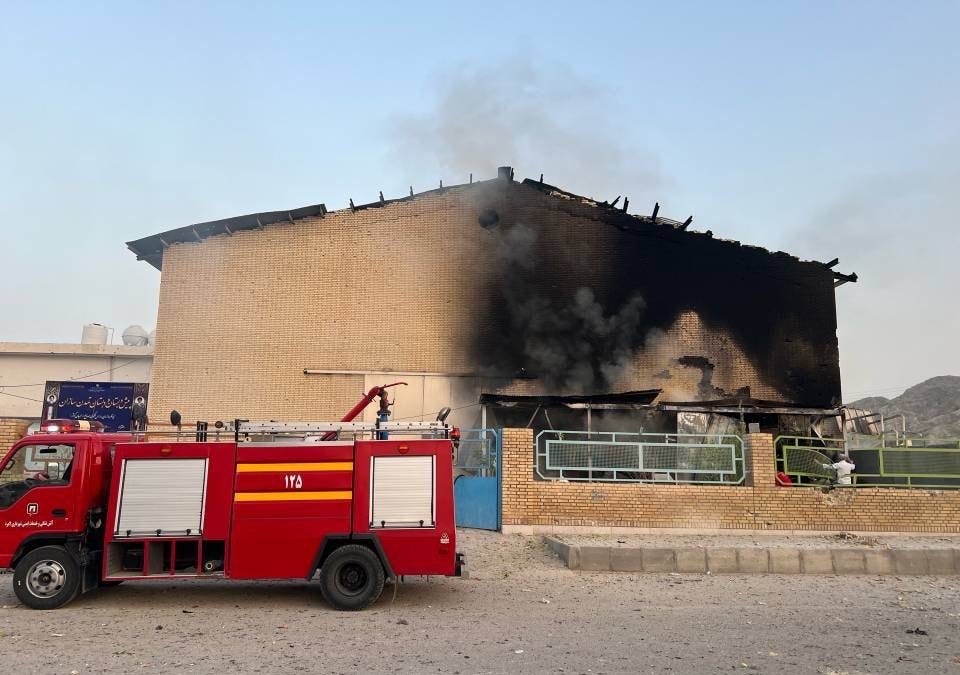
US bombing of girls' elementary school and sports gymnasium in Iran 2026
Less than a month after Kissinger and Haig began planning the secret bombing of Cambodia, the U.S. launched Operation MENU, a callously titled collection of B-52 raids codenamed BREAKFAST, LUNCH, SNACK, DINNER, DESSERT, and SUPPER that were carried out from March 18, 1969, to May 26, 1970. The attacks were kept secret through multiple layers of deception; Kissinger approved each one of the 3,875 sorties.
Survivors say that living through a B-52 bombing is unimaginably terrifying, bordering on the apocalyptic. Even within the confines of a deep, well-built bomb shelter, the concussive force from a nearby strike might burst eardrums. For those more exposed, the earth-shaking strikes could be extraordinarily lethal.
One morning, at the end of a busted dirt and gravel road near the Vietnamese border, I found Vuth Than, 78 years old at the time, with a shorn head of bristly gray hair and a mouth stained red with juice from betel nut, a natural stimulant popular in Southeast Asia.
Both Vuth and her sister, 72-year-old Vuth Thang, broke down as soon as I explained the purpose of my reporting. They were away from their home in the village of Por when a B-52 strike wiped out 17 members of their family. “I lost my mother, father, sisters, brothers, everyone,” Vuth Than told me, tears streaming down her cheeks. “It was so terrible. Everything was completely destroyed.”
 Nick Turse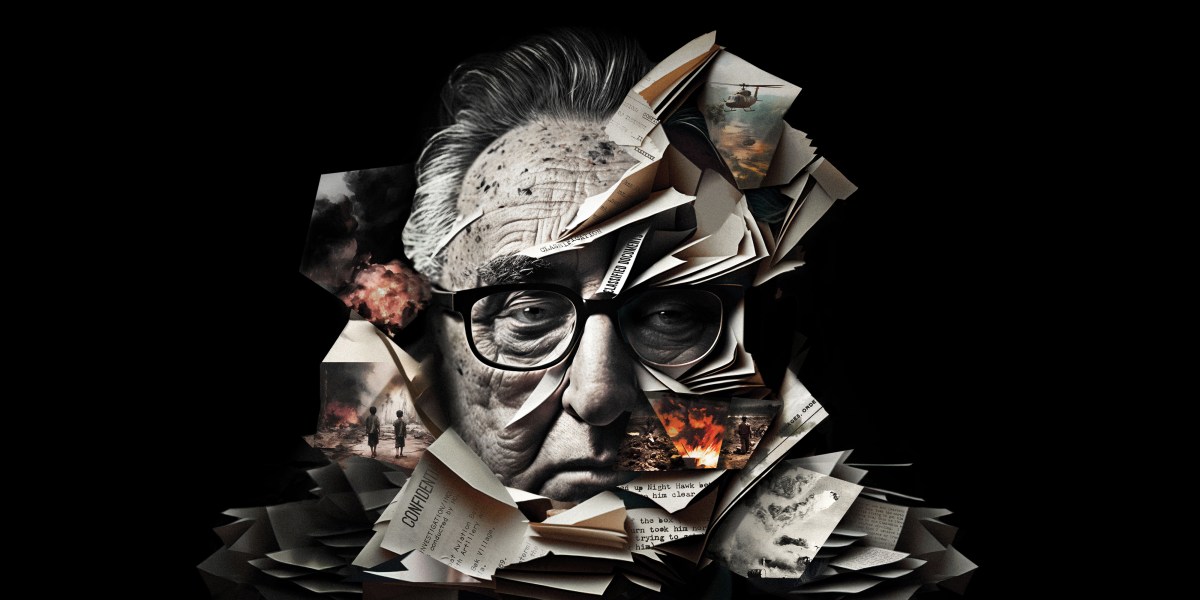
US secret bombing of Cambodia during 1960s & 1970s
Mohammed would later learn that the first victims that day, in the white Kia, were a young Iraqi medical student, Ahmed Haithem Al Rubia'y, and his mother, Mahassin, a physician. Mohammed is crystal clear that the car posed no threat. "There was absolutely no shooting at the Blackwater men," he says. "All of a sudden, they started shooting in all directions, and they shot at everyone in front of them. There was nothing left in that street that wasn't shot: the ground, cars, poles, sidewalks; they shot everything in front of them." As the Blackwater gunners shot up the Rubia'ys' vehicle, Mohammed said, it soon looked like a sieve "due to how many bullet holes it had." A Blackwater shooter later admitted that they also fired a grenade at the car, causing the car to explode. Mohammed says the Blackwater men then started firing across the square. "They were shooting in all directions," he remembers. He describes the shooting as "random yet still concentrated. It was concentrated and focused on what they aimed at and still random as they shot in all directions."
One of the Blackwater shooters was on top of an armored vehicle firing an automatic weapon, he says. "Every time he would finish his clip, he would throw it on the ground and would load another one in and would start shooting again, and finish the new one and replace it with another." One young Iraqi man got out of his car to run, and as he fled, the Blackwater shooter gunned him down and continued firing into his body as it lay on the pavement, Mohammed says. "He was on the ground bleeding, and they're shooting nonstop, and it wasn't single bullets." The Blackwater shooter, he says, would fire at other Iraqis and cars and then return to pump more bullets into the dead man on the ground. "He sank in his own blood, and every minute the [Blackwater shooter] would shoot left and right and then go back to shoot the dead man, and I could see that his body would shake with every bullet. He was already dead, but his body was still reacting to the bullets. [The shooter] would fire at someone else and then go back to shoot at this dead man." Shaking his head slowly, Mohammed says somberly, "The guy is dead in a pool of blood. Why would you continue shooting him?"
In his vehicle, as the shooting intensified, Mohammed yelled for the kids to get down. He and his sister did the same. "My car was hit many times in different places. All I could hear from my car was the gun shots and the sound of glass shattering," he remembers. [His sister] Jenan was frantic. "Why are they shooting at us?" she asked him. Just then, a bullet pierced the windshield, hitting Jenan's headrest. Mohammed shows me a photo of the bullet hole. […]
~
Ali and his father were inseparable. Ali's older brothers called him "Daddy's favorite," and the family affectionately called him by his kid nickname, Allawi. "He was the closest of my sons to me. He was my youngest and was always indulged," recalls Mohammed. "He would sleep on my arm. He's 9 and half years old but still sleeps on my arm. He has his own room, but he never slept alone." When the boy turned 9, Ali's father thought, "This can't go on—him sleeping on my arm as his pillow. So I said, 'Son, you're older now; go sleep like your brothers, in your bed in your room. It doesn't work anymore; you're getting older. You're gonna be a man soon.'"
"As you wish, father," Ali said. "He always said that," Mohammed recalls. "As you wish, father." Ali left the room, but Mohammed looked over and saw the shadow of Ali's feet under the door. "So I called him in, and Ali opened the door and said, 'Daddy, I'm Allawi, not Ali,'" Mohammed remembers. "He was telling me that he's still young." Mohammed gave in, and Ali slept in his arms again. "He never had a pillow besides my arm," says Mohammed.
As he sat in his severely damaged SUV, Mohammed thought that, in the midst of horror, a miracle had blessed his car. We are alive, he thought. As the Blackwater forces retreated, Mohammed told Jenan he was going to go check on the man who had been repeatedly shot by Blackwater. "I was deeply impacted by that man they continued shooting at," Mohammed recalls. As he exited his car, Mohammed's nephew yelled, "Uncle, Ali is dead. Ali is dead!" Jenan began to scream.
Mohammed rushed around to Ali's door and saw that the window was broken. He looked inside and saw his son's head resting against the door. He opened it, and Ali slumped toward him. "I was standing in shock looking at him as the door opened, and his brain fell on the ground between my feet," Mohammed recalls. "I looked and his brain was on the ground." He remembers people yelling at him, telling him to get out while he could. "But I was in another world," he says. Then Mohammed snapped back to consciousness. He put Ali back in the car and placed his hand over his son's heart. It was still beating. He got in the driver's seat of his car, tires blown out, radiator damaged, full of bullets, liquids leaking everywhere, hoping still that he could save Allawi's life. Somehow he managed to get the car near Yarmouk Hospital, right near the square. He picked up Ali and ran toward the hospital. He nearly collapsed on the road, and an Iraqi police officer took Ali from his arms and ran him into the hospital.
Mohammed checked that the other children were safe and then dashed to the hospital. "I entered the emergency room, and blood was everywhere, dead people, injured people everywhere," he remembers. "My son was in the last bed; the doctor was with him and had already hooked him with an IV line." As Mohammed stood by Ali's bed, the doctor told him that Ali was brain dead. "His heart is beating," the doctor said, "and it will continue to beat until he bleeds out and dies." The doctor told him that if there were any hope to be found, it would require taking Ali in an ambulance to a neurological hospital across town. The fastest route meant that they had to pass through Nisour Square. Iraqi police stopped them and told them they could not pass. "The US Army is here and won't let you through," the officer told them. The driver took an alternate route and was going so fast the ambulance almost crashed twice. When they got to the hospital, Mohammed offered to pay the driver—at least for the gas, which is customary. The driver refused. "No, I would like to donate blood to your son if he needs it," he told Mohammed. A few moments later, Mohammed stood with a doctor who told him there was nothing they could do. Ali was dead.
Mohammed wanted to take his son's body home with him, but the hospital regulations required that he get papers from the police. So Mohammed had to leave. He spent hours tracking down the right authority to sign off. Finally he was able to take Ali's body to prepare him for a Muslim burial. That night there was no electricity in Baghdad, so they had to run a generator to keep air-conditioning going to protect Ali's body from the sweltering heat. The next morning they took Ali to the southern holy city of Najaf to be buried at the family plot. "As Muslims, we believe that Ali died innocent with no obligation," says Mohammed. "My son died at an age where there were no strings attached. My son was young and innocent, so he flew up [to heaven] like a white dove.”
 Blackwater: The Rise of the World’s Most Powerful Mercenary Army
US private military company Blackwater massacre in Nisour Square, Baghdad, Iraq 2007
The tears also stream down my face as I read each of these stories again and reproduce them for you here.
How can one nation shatter so many hearts over and over again? How can one nation be capable of causing such anguish, loss and grief, to millions more people with the passing of every decade?
The words of Dr Martin Luther King Jr. echo hauntingly from decades ago, in a speech that he made exactly one year before he was assassinated:
“If America's soul becomes totally poisoned, part of the autopsy must read Vietnam. It can never be saved so long as it destroys the deepest hopes of men the world over.”
— Dr. Martin Luther King Jr (Beyond Vietnam)


Beyond Vietnam — A Time to Break Silence. Delivered 4 April 1967, Riverside Church, New York City.
For all that has been written about the decline of America, the empire still keeps going; still murdering, still shattering people's lives the world over.
I no longer know what to say or write. There seems to be nothing that can stop the US from its current course of waging destructive wars that kill and maim millions of people. No matter how many times it changes its president, no matter which political party, no matter the amount of protests, no matter which grassroots movement arises. No matter how many speeches are made, no matter how many political videos, shows and articles produced. No matter which decade we are in.
My third reason moves to an even deeper level of awareness, for it grows out of my experience in the ghettoes of the North over the last three years – especially the last three summers. As I have walked among the desperate, rejected, and angry young men, I have told them that Molotov cocktails and rifles would not solve their problems. I have tried to offer them my deepest compassion while maintaining my conviction that social change comes most meaningfully through nonviolent action. But they ask – and rightly so – what about Vietnam? They ask if our own nation wasn't using massive doses of violence to solve its problems, to bring about the changes it wanted. Their questions hit home, and I knew that I could never again raise my voice against the violence of the oppressed in the ghettos without having first spoken clearly to the greatest purveyor of violence in the world today – my own government. For the sake of those boys, for the sake of this government, for the sake of the hundreds of thousands trembling under our violence, I cannot be silent.
— Dr Martin Luther King Jr (Beyond Vietnam), April 1967
It's 2026, and the greatest purveyor of violence in the world today is still no different. Kidnapped Venezuela's president, bombed Iran and killed its Supreme Leader. Invades the most distant countries, wages the most wars & finances ever more destruction in Gaza and Ukraine during recent years. Snatches, assassinates and removes the leader of sovereign nations under the blatantly-hypocritical banner of "democratic freedom". Knows no limits and no borders when it comes to torture — both physical in Guantanamo & Abu Ghraib, and psychological when it comes to dissident journalists like Assange.
America's most-widely disseminated and yet least-talked about export? Boundless cruelty. It doesn't matter who is in charge. The endless horror show continues.
When you're born, you get a ticket to the freak show. When you're born in America, you get a front row seat.
— George Carlin